
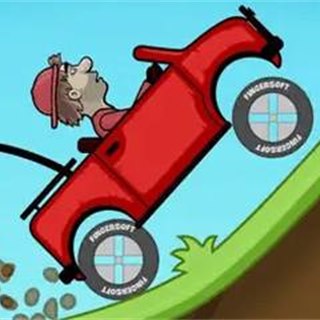
Drive a scrappy car over steep hills, collect coins, and keep your balance through bouncy physics courses.
How to Play Hill Climb Racing
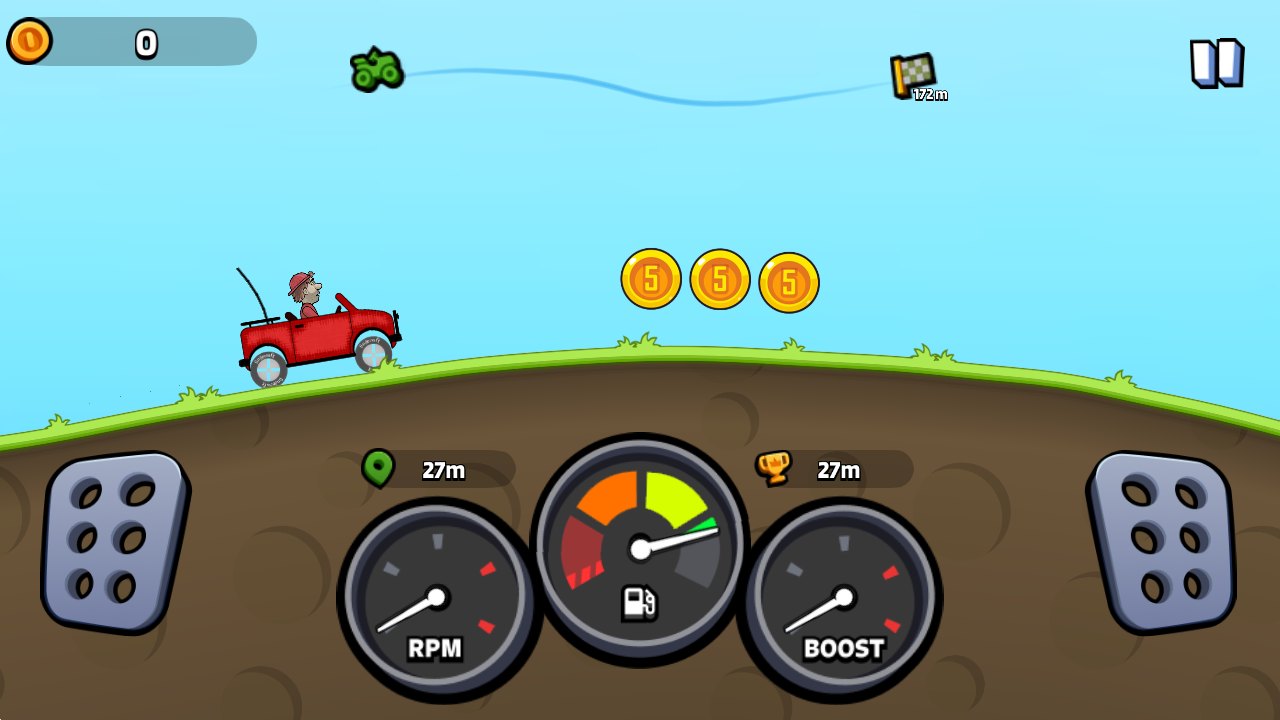
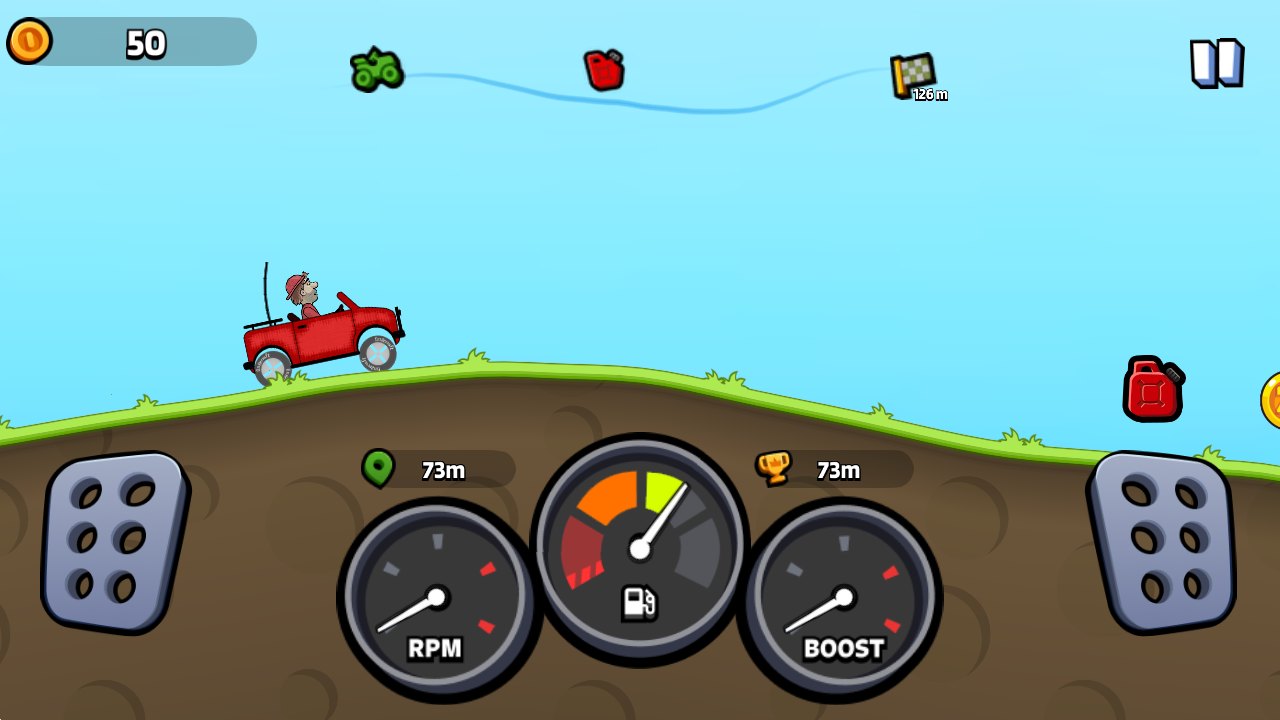
Hill Climb Racing is an endless physics-driving challenge built around distance, fuel, and vehicle control. Press the gas to climb, but ease off before a sharp crest so the car does not launch nose-first. The brake is also an air-control tool: use gas to rotate the nose upward and brake to bring it down for a safer landing. Follow the fuel gauge and make each fuel can a priority, because the run ends when the tank is empty or the driver crashes. Coins collected on the road and earned from flips or airtime can be spent between runs on engine, grip, suspension, and other vehicle upgrades. Better parts help, but smooth throttle control and balanced landings are what keep a run alive.
Game Controls
Use the right arrow or the on-screen gas pedal to accelerate. Use the left arrow or brake pedal to slow down, reverse, and control backward rotation in the air.
Tips for Hill Climb Racing
- Watch the fuel gauge before chasing a high coin line; reaching the next fuel can is more valuable than a risky pickup.
- Release the gas near the top of a steep hill so the vehicle leaves the ground with less forward rotation.
- Use gas to lift the front of the vehicle in midair and brake to lower it, then aim to land on both wheels.
- Build speed before long climbs, because accelerating only after the slope becomes steep can leave the vehicle stuck.
- Spend early coins on balanced upgrades instead of maximizing one part while grip or suspension remains weak.
- A controlled landing usually beats an extra flip when the terrain ahead is uneven or the fuel supply is low.
Why We Recommend This Game
Hill Climb Racing makes two pedal controls feel surprisingly strategic. Every hill asks whether to accelerate for momentum, brake before a dangerous crest, or adjust the vehicle in midair for the landing. Fuel cans create a moving deadline, while coins and mechanical upgrades make failed runs useful. The combination of loose physics, distance records, vehicle tuning, and quick restarts gives the simple countryside course a strong one-more-run appeal.
Comments