
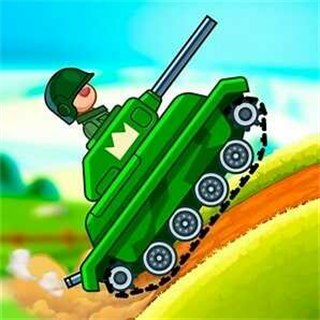
Hills of Steel is a side-scrolling tank action game in which the shape of the ground matters as much as the cannon. The local browser build places armored vehicles on rolling hills, slopes, and drops, so driving, aiming, and firing are connected decisions. A shot taken while the tank is angled uphill travels differently from one taken on level ground; accelerating over a crest can improve a firing line or leave the vehicle exposed. The aim is not merely to hit an enemy as quickly as possible, but to keep the tank moving, stay balanced, and use the terrain before the opposing force does. The included build is not presented as a single static duel. Its local game data contains level progression, bosses, a Survival mode, tank statistics such as damage, health, and speed, and an upgrade path. Loading tips also reference changing tanks, revives, and ability choices. Those details give the combat a practical loop: complete the current encounter, learn what the terrain and enemy pressure demand, then make a more suitable choice for the next attempt. Whether you are pushing through a regular stage or trying to last in Survival, the best result comes from treating the hill as part of the weapon system rather than as scenery.
How to Play Hills of Steel
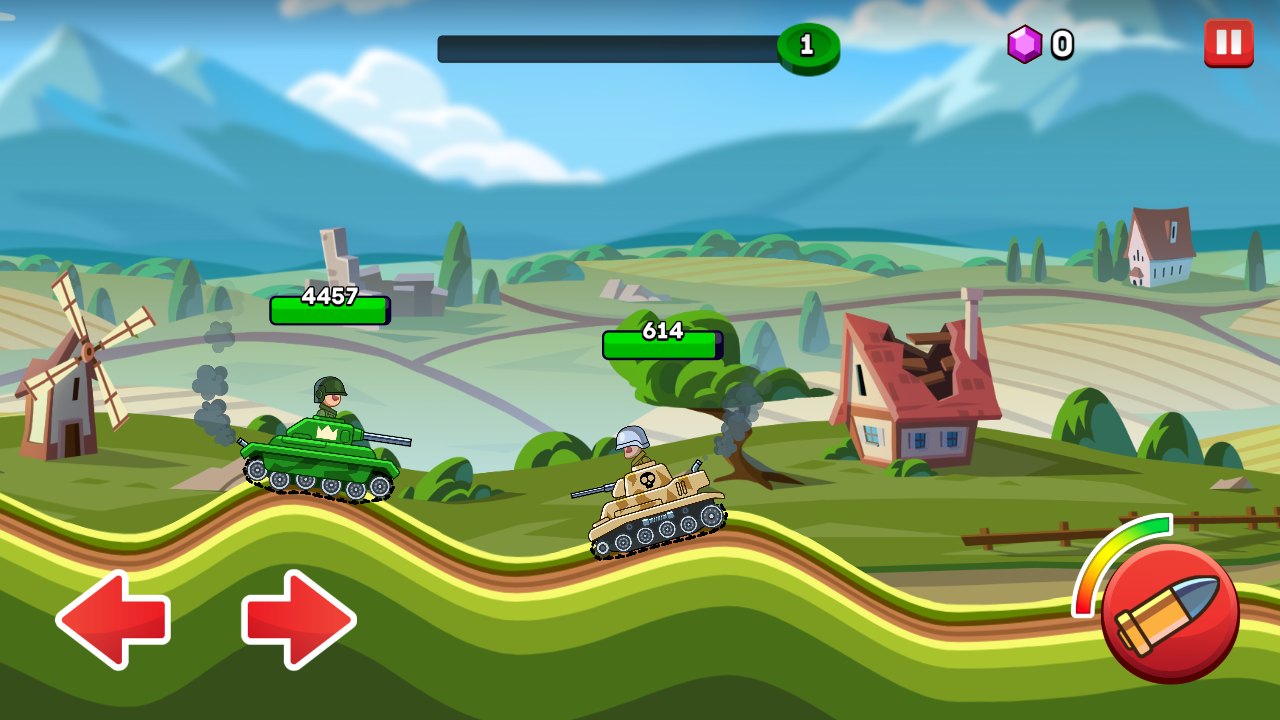
Start by reading the terrain before committing to a charge. A hill can provide cover, raise the cannon for a longer arc, or tip the hull into an awkward position. Move far enough to create a useful angle, then pause long enough to make the shot count. Firing without considering the slope may waste a turn or leave you rolling into an enemy line. When an opponent is above or below you, use the elevation difference to judge whether you need to reposition instead of simply firing again from the same spot. Protect the tank’s balance as carefully as its health. Over-accelerating on a steep crest can expose the underside or point the cannon away from the target. On a descent, avoid rushing into the next dip if it will remove your space to aim or retreat. The goal is to keep the vehicle in a controllable position while wearing down the opposition. This becomes more important when a stage introduces denser pressure, tougher enemy vehicles, or a boss encounter. A clean line through the hill often creates more value than a reckless attempt to force one extra shot. Use the choices between encounters deliberately. The local build includes tank stats, upgrades, different tanks, revives, and ability selections, so do not assume one option is best for every level. If a previous run ended because you could not survive sustained fire, prioritize durability or a tank better suited to the terrain. If you were safe but could not finish enemies efficiently, consider damage, shot opportunities, or an ability that helps control the fight. In Survival, conserve position and avoid being surrounded; the challenge is endurance, not a single dramatic advance. Review why the last battle failed, adjust one relevant choice, and test that change on the next run.
Game Controls
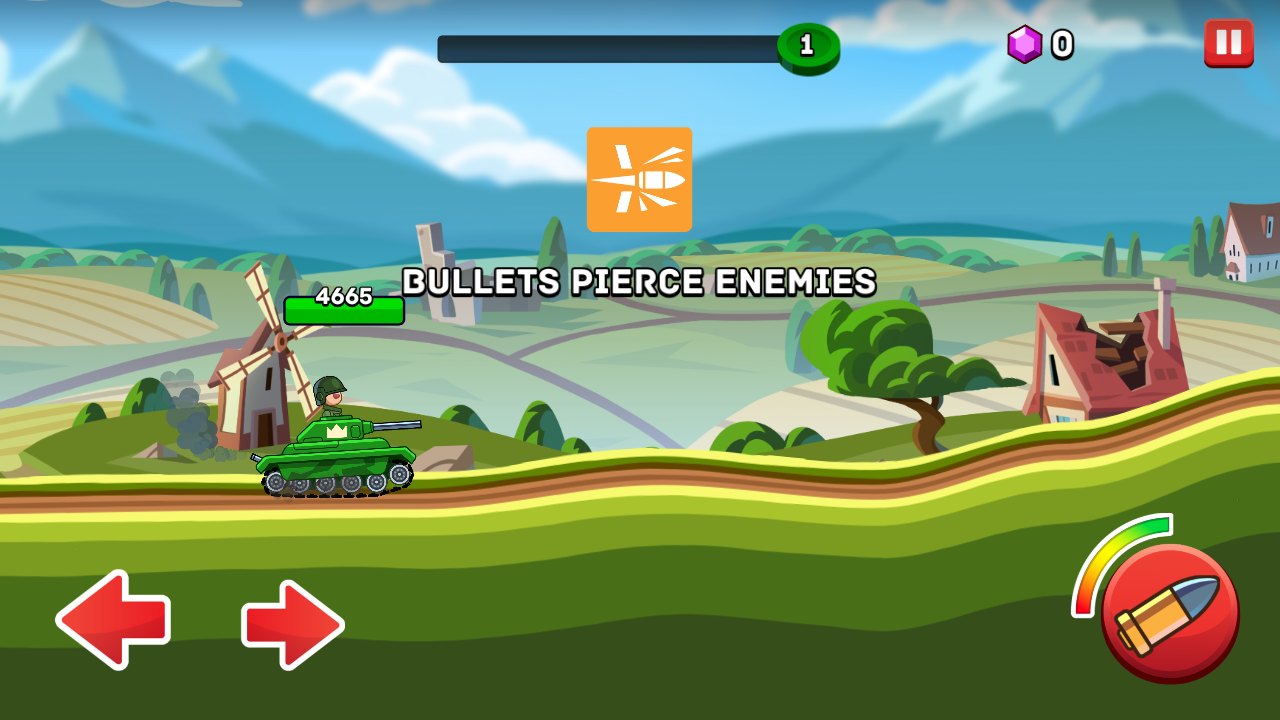
Left control - Drive the tank left Right control - Drive the tank right Shoot control - Fire the cannon On-screen menus - Choose tanks, upgrades, revives, and ability picks when available Note: this embedded web build exposes on-screen control labels, not a verified keyboard key map.
Tips
Why We Recommend This Game
Hills of Steel is worth playing because its tank combat has a real sense of position. Uneven ground is not a decorative background: it affects momentum, exposure, and the line of every cannon shot. That gives each encounter a satisfying physical rhythm of moving into place, taking a measured shot, and deciding whether to press forward or hold a safer hill. The browser build also offers more than a single repeated skirmish. Levels, bosses, Survival, tank changes, upgrades, revives, and ability picks give repeated runs a concrete purpose. A failed battle can reveal whether the issue was aim, balance, durability, or the wrong choice for the stage. That makes improvement understandable rather than abstract. Players who enjoy arcade shooting with vehicle weight, tactical use of terrain, and a meaningful progression loop will find this much richer than a simple point-and-fire tank game.
Comments
New comments are closed.